FAQ
General Therapy Questions
Why do people go to therapy?
Because they’ve been a CHILD. Kidding, but also not kidding.
I believe everyone can benefit from therapy because it challenges you to develop insight and express yourself in ways you’ve likely never been asked.
Therapy increases empathy and leads to better relationships- who doesn’t need that?
What is therapy supposed to achieve?
Everyone has different goals for therapy. Some people come with specific short term goals (I want to learn coping skills to help me with a presentation) and others come in with open-ended or long-term goals (I want to better understand how my childhood impacts my anxiety in relationships).
The goals you set will determine what you achieve! Overall, I hope my clients leave therapy with insight, coping skills, and self-compassion.
How long are people in therapy?
This varies from person to person. Some people have short term goals that can be achieved in a few months.
Other clients have deeper issues to process and may be in therapy for several years.
You will know its time to wind down sessions when your goals have met or we discuss you trying a new type of therapy to meet new goals.
Live Better Austin Questions
What is a sliding scale?
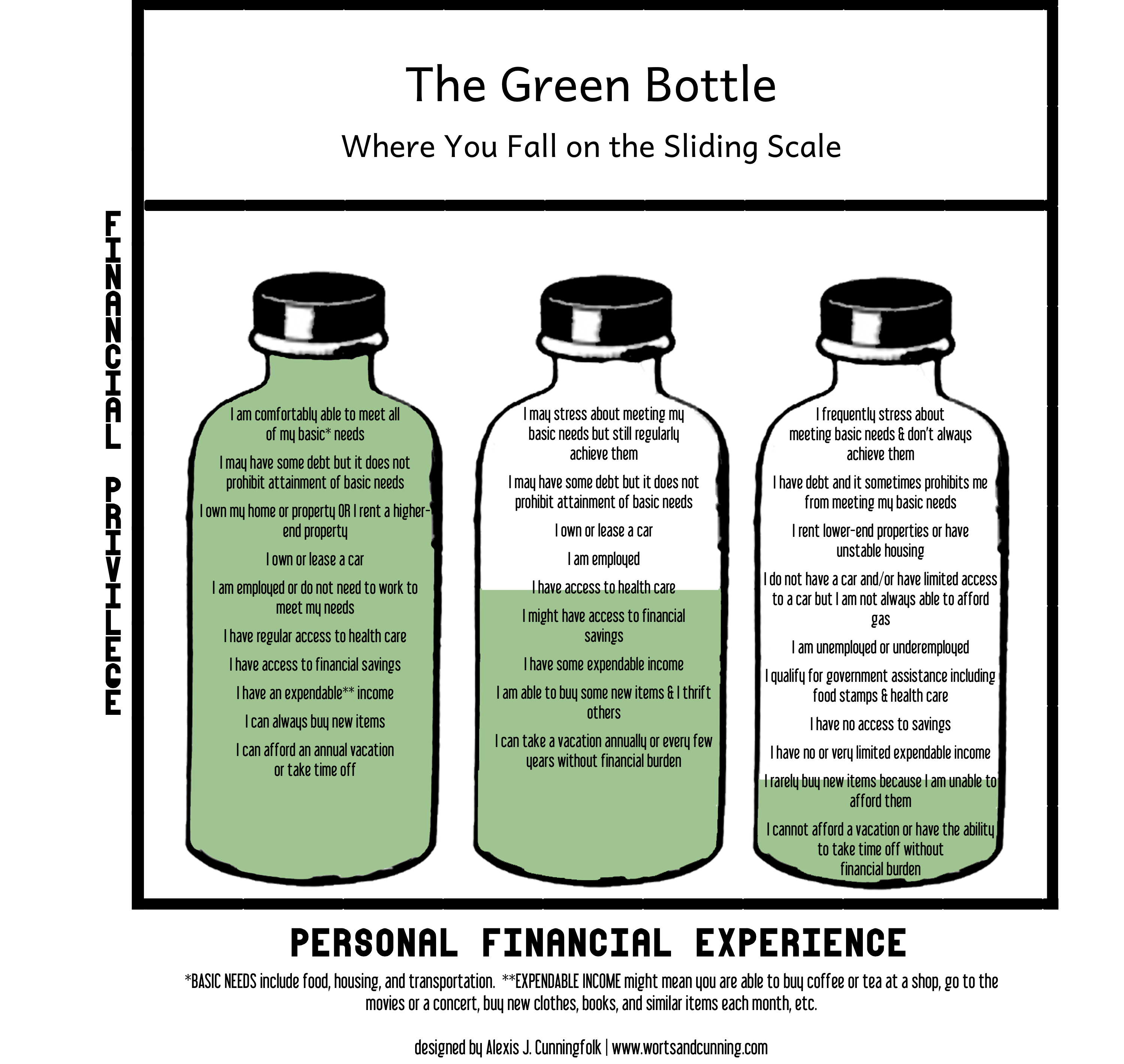
Also called an anti-oppression scale, a sliding scale allows those who have means and privilege to afford mental health services to offset the costs of services for those who do not. I encourage my clients to carefully consider their ability to pay and help support those in need as well.
Check out my Fees page to see what sliding scale options are available.
To better understand where you might fall, check out this Sliding Scale image.
What are sessions like with you?
Virtual and in-person therapy sessions are 45-50 minutes long.
Sessions are customized to what you need and want. Some people prefer structure (reviewing homework, agreeing on a topic to discuss in advance, etc) and I even have clients come with a list! Others prefer things to be more open-ended (exploring what has happened the past week, talking about conflict or emotions that came up, etc)
How much does therapy cost and how often do I have to come?
My full fee sessions are $150, but I do offer sliding scale fees for clients who do not have the means to pay the full fee. See my fees page for more info.
My clients come to sessions weekly or biweekly. I also offer monthly and drop-in sessions to clients who are showing improvement and only need occasional support.
Insurance Reimbursement Questions
Why don’t you accept insurance?
At this time I have chosen to remain a private pay therapist in order to serve my clients with the most ethical and unrestricted care.
Insurance companies require a lot of personal information be shared about clients in order to cover session fees. They require that all clients receive a diagnosis from the DSM and they will occasionally request session notes or summaries.
They also have the right to determine how many sessions they will cover, as well as if your diagnosis is a valid reason for therapy.
What are “Out of Network” benefits?
You may have Out of Network mental health coverage through your insurance- meaning you can get reimbursed if you see a provider outside of your plan’s network.
If this is the case, I can provide you with a superbill that will list a diagnosis, what services were provided, and how much you paid. You will then submit this to your insurance company.
This is dependent on your insurance company and you will need to contact them for more information about your specific plan.
Why is my deductible important if I want to file a superbill?
CHECK ON YOUR DEDUCTIBLE! If you have a deductible thats in the thousands, it may actually be better to just pay out of pocket for therapy (unless you know you will be meeting that deductible quickly). I’d be happy to help you do some math to determine if it might be better for you to pay a sliding scale rate rather than go through you insurance.
Example: a year of biweekly therapy at $100 a session will cost less than $2500. If you have a $3000+ deductible, your insurance wouldn’t cover any costs until you hit that $3000.